Research Events
Research Events
Overview
Team size: 2-7 (depending on the event)
My Role: UX Researcher
Impact: Established research sessions at National Geographic tentpole events
My Favorite Part: Trying something new and having it go really, really well; having so much fun talking to so many Explorers
What Are Tentpole Events
A few times a year, National Geographic Society hosts huge events for their Explorers to come together and share their stories with each other, Society staff, and donors. It’s a week of 100-300 Explorers hanging out all over basecamp just waiting to talk to you about their work. If you think that sounds unimaginably awesome, you would be correct.
Event 01 Research
Five months after I started working at National Geographic I attended the first large event: Storyteller’s Summit. Since I was still onboarding into my role, my manager explained that the events were a great chance to get to know Explorers and harvest some data live and in person (a rarity for us).
There were no formal ways to gather data at events like this. I was told the best place to bump into Explorers to ask them questions was in the cafeteria, and allow them to come to me. Our department had a large sign that said “come help us improve our website” so I brought that into the cafeteria on the first day of the event and sat in path of traffic where I could be easily seen but also easily avoided in case Explorers didn’t want to engage.
Event 01 Retro
Over the course of the week, I was only able to gather 7 user responses. Most of them were quick and ultimately the feedback I gathered wasn’t useful to our team. After the event I made a list of things that went wrong.
What went wrong
Timing
There was no specific time for Explorers to give feedback, so when they found me they weren’t in a headspace to provide feedback
Since there wasn’t a specific time to get feedback, I also had trouble fitting it into my day. Although the event was going on, I still had my day-to-day work to do, so I found myself squeezing research in between meetings and other work
Location - the cafeteria made it difficult to talk when it was loud
No incentive for testers
Explorers didn’t know I was there so those who were interested in providing feedback wouldn’t have known to go to the cafeteria
Preparing for Event 02
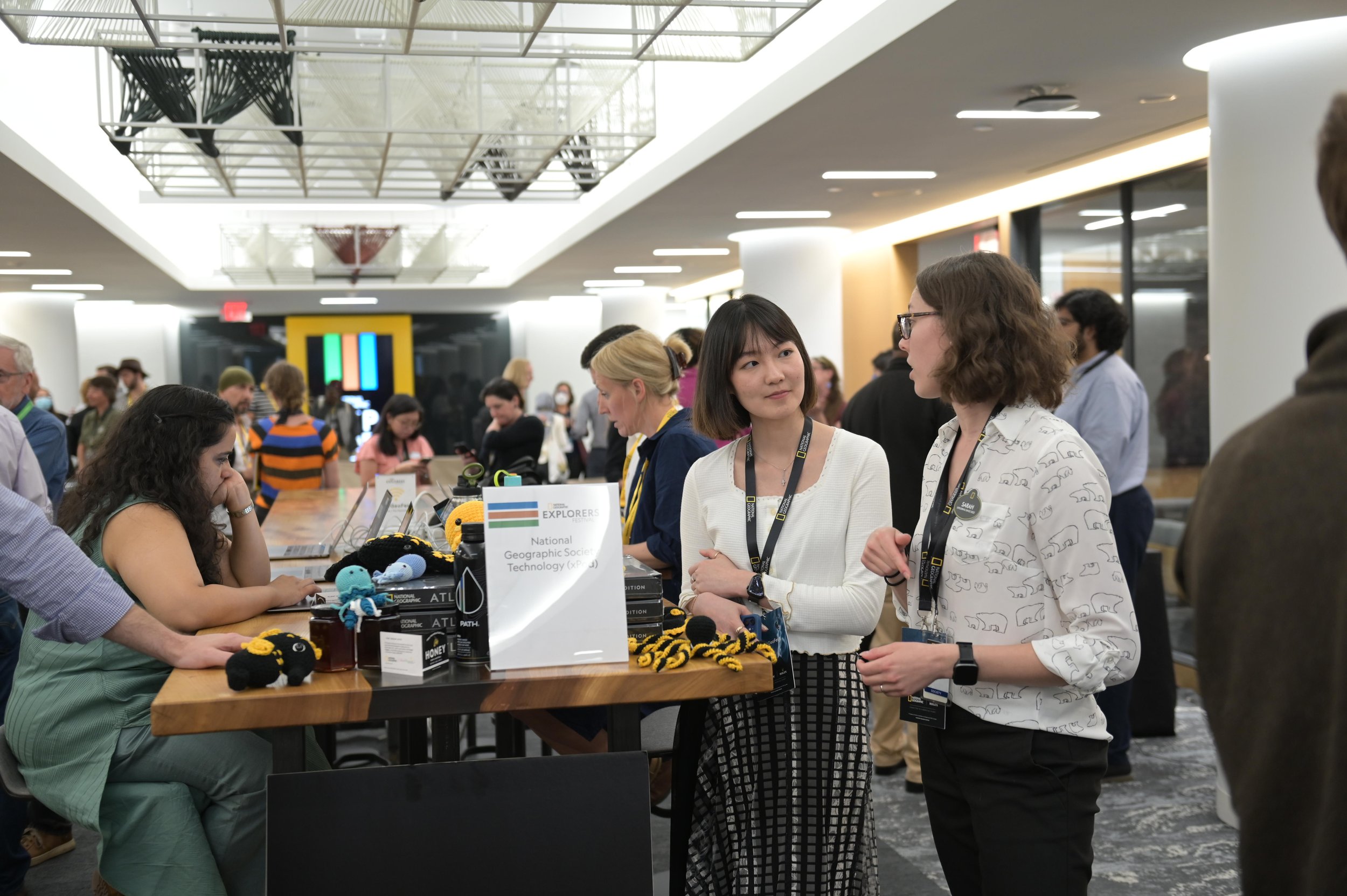
The second big event was five months later. In those months, I met with several other teams to organize a test pilot. I wanted to have a dedicated testing space in a place that Explorers knew about and were expecting us to be in. I also wanted to have something specific to test so I worked with my team to decide what questions we had that could be answered at an event. We landed on a card sort to determine how to organize the resources. It would be tested with Maze, our testing platform, and we’d be given a large table and a dedicated space and time during the event to host the test.
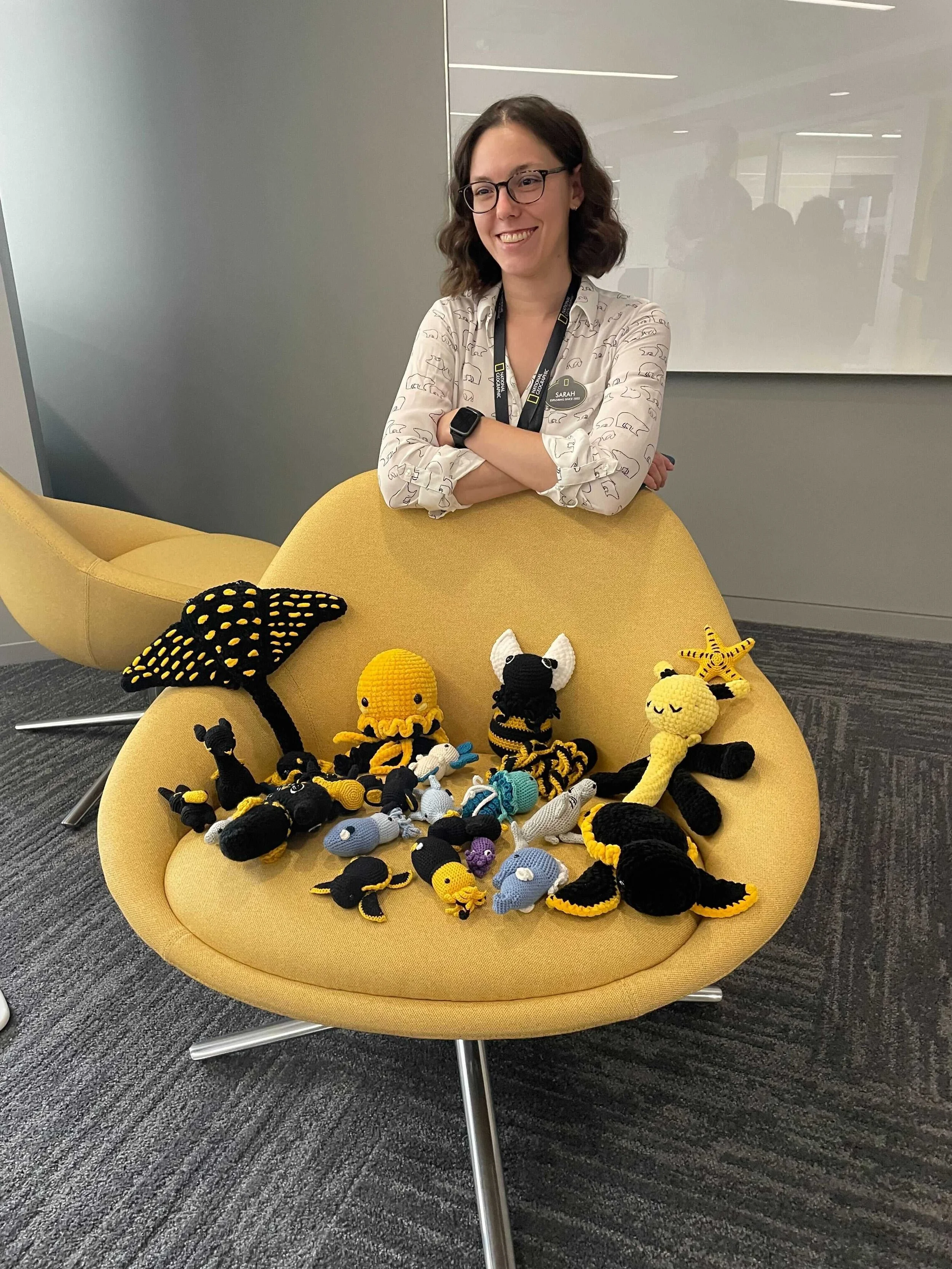
I also wanted to add incentives to draw Explorers to our table. I reached out to our head of sustainability to ask if she had any leftover branded items and she passed me 12 large atlases and 20 containers of the honey that National Geographic harvests at basecamp. I also wanted to put my own touch on it, so over the months leading to the event, I learned to crochet small animals in multiple colors, especially black and yellow (to mimic the brand).
Event 02
In total, we gathered 34 user responses, a huge improvement from the first event. Explorers loved the incentives and by the end of the event they were coming to our table because they had seen someone else with one of the incentives and they wanted one too. The card sort provided a clear way forward and the changes it informed were launched only a few months later. All in all, the second event was a huge success.
The Next Events
We continued research at every subsequent event. Every event gave us more opportunities to gather information from Explorers and as the years continued, many of them remembered us and came to find us. We gathered feedback for multiple projects, including the Explorer map, the funding portal, and our digital community. The testing events were so successful that they have continued after my departure and remain a part of National Geographic Society tentpole events.